Is Westwood Condo Living Right For Your Lifestyle?
If you want Westside convenience without giving up the benefits of ownership, Westwood condo living probably keeps coming up in your search. That makes sense because Westwood offers a rare mix of walkability, access to UCLA, and a wide range of condo options in one of Los Angeles’ most active neighborhood settings. If you are trying to decide whether the lifestyle fits your day-to-day needs, this guide will help you weigh the tradeoffs, compare nearby alternatives, and think more clearly about your next move. Let’s dive in.
Westwood is shaped by two major anchors: UCLA and Westwood Village. Westwood Village is a walkable historic commercial district with more than 260 neighborhood-serving businesses, along with restaurants, shops, and cultural destinations.
That commercial core also benefits from services funded by the Westwood Village BID, including cleanliness, safety, beautification, parking, and traffic management. For you, that can translate into a more supported day-to-day environment if you value being close to errands, dining, and entertainment.
UCLA also has a major impact on how the neighborhood feels. The university reports 46,678 total enrollment and 5,464 faculty members, which helps explain why Westwood often feels busier and more active than a purely residential area.
Westwood condo inventory tends to offer more range than many buyers expect. Current listings show everything from compact one-bedroom units to larger two- and three-bedroom residences, with many homes falling roughly between 700 and 1,600 square feet.
You can also find bigger layouts in the 1,600 to 2,400-plus square-foot range. Current examples include homes as small as 661 square feet and as large as more than 2,444 square feet, which means your options may include anything from a low-maintenance pied-à-terre to a larger full-time residence.
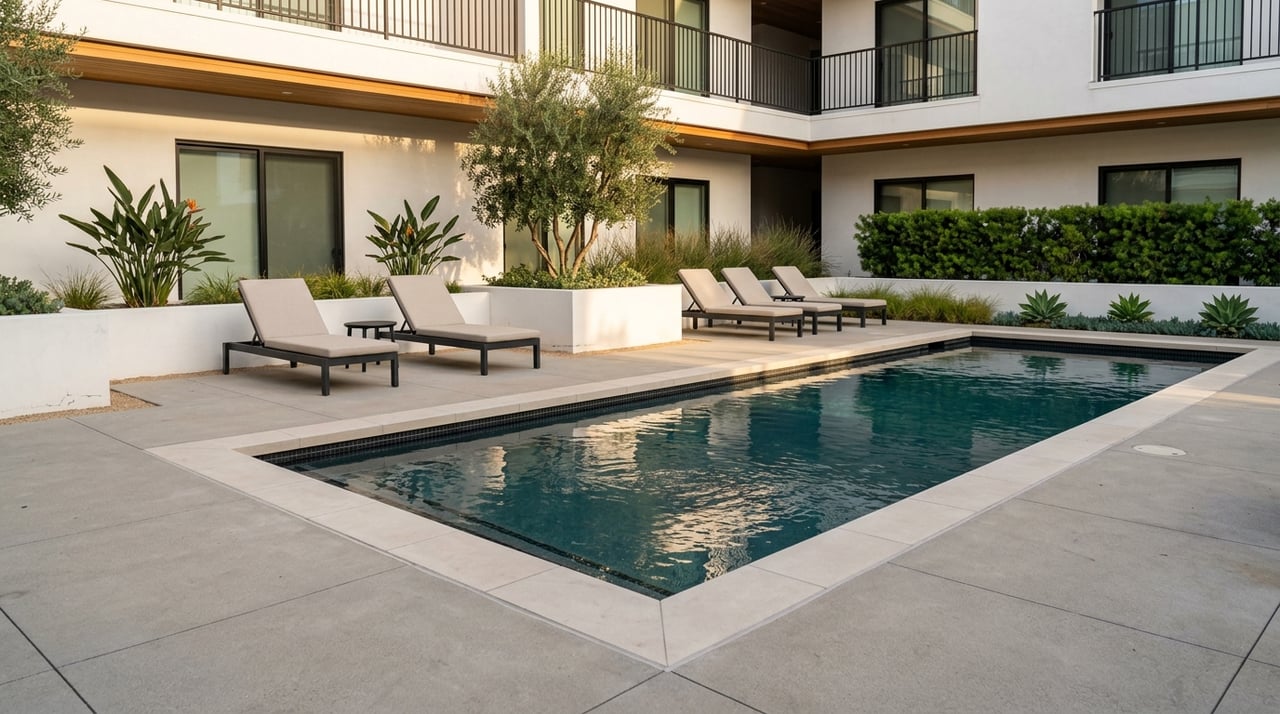
Amenities vary just as much as floorplans. Some buildings offer simpler features like secure access, elevators, balconies, community pools, and private storage, while others provide more full-service options such as valet, concierge, fitness centers, tennis courts, and entertaining spaces.
That variety matters because condo living is not one-size-fits-all. In Westwood, you can often choose between a quieter, more residential building style and a higher-service luxury tower without leaving the neighborhood.
Westwood can be a strong match if you want your home to support a more efficient routine. The neighborhood is especially relevant for academics, graduate students, professionals, and buyers who want to stay close to UCLA or reduce time spent driving.
UCLA says two-thirds of students live within five miles of campus, and half live within one mile. That steady off-campus pattern helps reinforce why Westwood remains top of mind for people who want a short commute and easy access to campus-related activity.
You may also appreciate Westwood if you like having daily conveniences nearby. UCLA Housing notes that Westwood has four supermarkets, plenty of restaurants, movie theaters, and convenience stores, which supports a car-light lifestyle for many residents.
One of Westwood’s biggest lifestyle advantages is mobility. UCLA Transportation says Bruins can use subsidized transit passes, BruinBus runs year-round through campus and Westwood Village, and the area is also served by Metro, Santa Monica Big Blue Bus, Culver CityBus, and commuter express lines.
If you prefer to walk, bike, or use transit for at least part of your week, Westwood is set up for that. UCLA Housing specifically notes direct options to campus include walking, biking, Big Blue Bus, and BruinBus.
The future transit picture could also matter if you plan to hold a condo for several years. Metro says construction is continuing on the D Line extension in Westwood, and UCLA Transportation says the Westwood/UCLA station has an estimated debut of 2027.
For many buyers, that is not just a transit note. It is part of the long-term lifestyle and convenience story, especially if you are thinking about future access across the Westside and beyond.
Westwood is not ideal for every buyer, and that is important to acknowledge upfront. If you want quiet streets, easy curb parking, or a purely residential atmosphere, the neighborhood may feel busier than you prefer.
That tradeoff is directly tied to what makes Westwood appealing in the first place. UCLA Housing notes that street parking is hard to find in the densest areas, and the neighborhood’s student and academic energy is part of daily life.
In other words, Westwood offers convenience and activity, but it may ask you to give up some calm and parking ease in return. Your decision should come down to whether that exchange supports the way you actually live.
If you are cross-shopping nearby condo neighborhoods, Century City is one of the clearest comparison points. Realtor.com’s May 2026 neighborhood snapshots show a median listing price of $1,295,000 in Westwood versus $1,495,000 in Century City.
Median rent also runs higher in Century City at $7,150, compared with $4,385 in Westwood. That gap helps show Century City’s more expensive profile.
The lifestyle feel is different too. Century City’s BID describes it as a business hub with more than 2,500 businesses, about 6,000 residents, and about 50,000 employees, and the neighborhood is widely recognized for its high-rise setting.
If your priority is a more tower-driven, luxury, office-district environment, Century City may be the better fit. If you want something that still feels central and amenity-rich but more tied to campus life and a neighborhood village setting, Westwood may feel more natural.
West Los Angeles is often the more budget-conscious alternative. Realtor.com’s May 2026 neighborhood snapshots show West LA with a median listing price of $1,029,000, below Westwood’s $1,295,000.
Median rent is also lower in West LA at $3,850 versus $4,385 in Westwood. UCLA Housing notes that West LA has many small apartments that are slightly less expensive than Westwood and offers good bus access along Wilshire and Santa Monica boulevards.
Current condo listings in West LA show a broad mix of one-, two-, and three-bedroom homes, often with features like balconies, fireplaces, roof decks, office nooks, and garage parking. If your top priority is a lower entry point and a wider mix of smaller condo and apartment options, West LA may deserve a closer look.
Westwood, by contrast, sits between Century City and West LA both geographically and in price. That middle position is part of its appeal for buyers who want a balanced mix of lifestyle access, condo variety, and neighborhood energy.
Westwood appears to offer room for comparison rather than pure urgency. Realtor.com describes Westwood, Century City, and West LA as balanced markets, which can give you more space to evaluate tradeoffs carefully.
Westwood’s median days on market is 56, compared with 64 in Century City and 42 in West LA. In practical terms, that suggests Westwood is active, but not necessarily moving at the same pace as the more entry-priced West LA market.
Inventory also appears substantial enough for buyers to compare building styles and HOA setups. Redfin currently shows 146 condos for sale in Westwood at a median listing price of $1.1M, while Realtor.com shows 231 homes for sale neighborhood-wide.
If you are deciding between renting and buying, that range of options can be useful. It gives you a chance to compare layout, building service level, and long-term fit instead of forcing a quick yes-or-no decision.
Before you decide whether Westwood condo living is right for you, it helps to get specific about your daily priorities. A condo may look great on paper, but the best fit usually comes down to routine more than square footage alone.
Ask yourself:
The more clearly you answer those questions, the easier it becomes to tell whether Westwood is the right fit or whether a nearby area may suit you better.
Westwood condo living can be a smart lifestyle choice if you value convenience, access to UCLA, nearby dining and culture, and a neighborhood where many daily needs can be handled without a long drive. It is especially compelling if you want a wide choice of condo sizes and amenity levels while staying in a location with steady housing demand tied to a major university and a well-established village core.
At the same time, Westwood is not for everyone. If you prefer quieter streets, easier parking, or a less active environment, you may find better alignment in West Los Angeles or, if budget allows and the setting fits, Century City.
The right answer depends on how you live now and how you want to live over the next several years. If you want tailored guidance on Westwood condos, nearby alternatives, or how this decision fits your broader Westside goals, reach out to Amy Um for a complimentary consultation.
Amy & Augustine bring representation with unparalleled strength. They share a personal pledge to treat every person who walks through the door as a top priority, completing each transaction with integrity and professionalism.
Amy Um | CA DRE# 01961595
Estates Director | REALTOR®
(310) 804-5553
[email protected]
Augustine Um | CA DRE# 02146399
Estates Director | CPM© | CAPS© | NPCC | CCRM | REALTOR®
(213) 400-1111
Address
1010 Montana Ave.
Santa Monica, CA 90403