Westchester Los Angeles Neighborhood Guide Near LAX
If you want Westside access without giving up a true neighborhood feel, Westchester deserves a close look. This Los Angeles community sits next to LAX, which means you get unusual convenience along with a few lifestyle tradeoffs that matter when you are deciding where to live. In this guide, you will get a practical look at Westchester’s housing, commercial areas, schools, amenities, and market positioning so you can decide whether it fits your goals. Let’s dive in.
Westchester is an established Westside neighborhood with roots in agriculture and major growth during the LAX and aerospace boom. According to the City Council District 11 neighborhood page, it is home to about 48,000 residents, and about half of its housing stock is made up of single-family detached homes on relatively small lots.
That built form helps explain Westchester’s appeal. You will find a neighborhood that still feels residential in many pockets, while remaining closely tied to major employment centers, higher education campuses, and airport access.
Westchester sits in the Westchester-Playa del Rey Community Plan area, which also includes Playa Vista. City Planning notes that this community plan update process is still underway, and the area is directly adjacent to LAX.
From a day-to-day standpoint, location is one of Westchester’s biggest selling points. You are near the airport, connected to the broader Westside, and positioned close to Silicon Beach destinations that many buyers care about for work, travel, and lifestyle.
Westchester’s main commercial corridors are Lincoln Boulevard, Sepulveda Boulevard, and Manchester Avenue. These streets shape much of the neighborhood’s daily rhythm, from errands and dining to commuting and access around the Westside.
The area also has a weekly farmers market and the Westchester-Loyola Village Branch Library, both of which strengthen its local identity. These kinds of everyday amenities matter because they make a neighborhood feel lived-in, not just well-located.
The Neighborhood Council of Westchester/Playa divides the community into 15 residential areas so different parts of the neighborhood are represented. Named areas include Kentwood, Westport Heights, and The Jungle.
On the planning side, the City formally identifies Downtown Westchester and Loyola Village as major commercial nodes. Downtown Westchester is described as a northern gateway to LAX, while Loyola Village centers around Lincoln and Manchester and connects to Loyola Marymount University, the recreation center, the golf course, and the library.
Downtown Westchester is important if you care about central access and a more active commercial setting. Its gateway location near LAX gives it a strong connection to airport-oriented movement and nearby services.
Loyola Village offers a recognizable neighborhood hub around Lincoln and Manchester. With LMU, the recreation center, golf course, and library nearby, it has a strong institutional and community presence that many buyers appreciate.
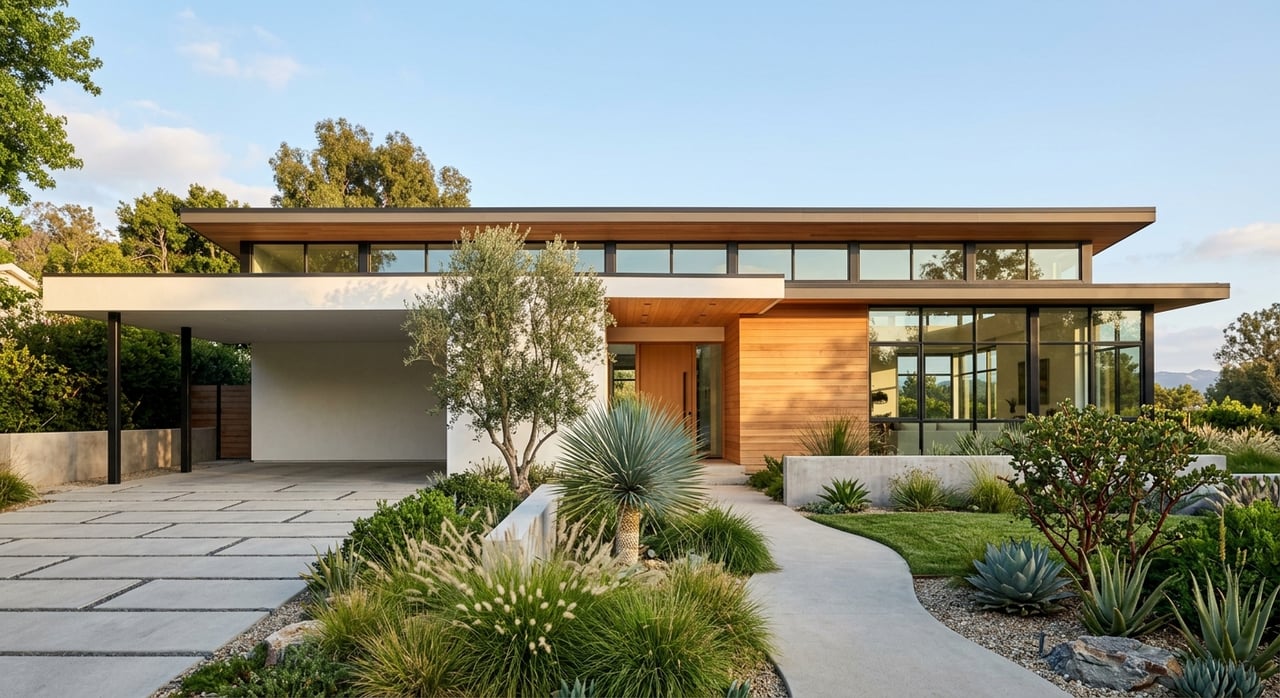
Outside the commercial nodes, much of Westchester’s identity comes from its residential streets. Depending on where you look, you may find a more traditional postwar feel, larger remodeled homes, or a location that prioritizes convenience to major roads and nearby Westside destinations.
Westchester is still known for detached housing. Many of its original postwar ranch homes were built in the 1940s and 1950s for returning GIs and aerospace workers, and the Los Angeles Times reported that many have since been remodeled or expanded into larger two-story homes.
That means today’s housing stock can feel varied even within the same area. You may see preserved mid-century character on one block and significantly updated or enlarged homes on the next.
Current pricing data vary somewhat by source, but they point to a market in roughly the mid-$1.5 million to upper-$1.6 million range. Redfin reported a March 2026 median sale price of $1.51 million, Zillow showed a typical home value of $1.50 million and a March 2026 median sale price of $1.70 million, and Realtor.com showed a median listing price of $1.699 million with a 44-day median days on market.
For buyers, that suggests you should go in with a realistic budget and a clear understanding of how property condition and location within Westchester can affect pricing. For sellers, it points to a neighborhood where presentation, pricing strategy, and property positioning can still make a meaningful difference.
If you are cross-shopping Westside neighborhoods, Westchester often sits in an interesting middle position. Redfin’s March 2026 median sale prices showed Culver City at $1.4 million, Westchester at $1.5 million, Santa Monica at $1.6 million, and Playa Vista at $1.3 million.
Nearby Realtor.com neighborhood data also showed Playa del Rey at about a $1.09 million median listing price and Playa Vista at about $1.30 million. While every submarket behaves differently, those numbers help frame Westchester as a strong option for buyers who want Westside access and a detached-home profile at a level that can compare favorably with some neighboring areas.
Westchester has several local public school options listed by the City Council District 11 neighborhood page, including Cowan Avenue Elementary, Kentwood Elementary, Loyola Village Elementary, Orville Wright Middle Magnet, Paseo del Rey Natural Science Magnet Elementary, and Westchester Enriched Sciences Magnets.
Some campuses also have distinct academic themes. Cowan Avenue Elementary highlights STEM, GATE, and Spanish World Language Immersion, Kentwood Elementary emphasizes an inclusive K through 5 program, Loyola Village Fine and Performing Arts Magnet is identified as a California Distinguished School, and Wright Middle School’s magnet focuses on engineering and design.
Westchester Enriched Sciences Magnets is a full magnet high school on Manchester Avenue with three magnet programs, about 600 students, and a reported 96% graduation rate. Enrollment runs through LAUSD’s Choices process.
Higher education is a visible part of Westchester’s identity. Loyola Marymount University’s Westchester Main Campus is located at 1 LMU Drive, and Otis College has its residential main campus in Westchester on Lincoln Boulevard.
That campus presence helps shape the neighborhood in practical ways. It contributes to local activity, supports nearby businesses, and adds another layer to the housing demand and lifestyle mix in the area.
Westchester offers several everyday recreation anchors, including Carl Nielsen Park, Westchester Golf Course, and Westchester Recreation Center. These amenities support the neighborhood’s residential character and give you more than just a place to sleep between commutes.
The library and farmers market also add to that routine livability. If your ideal neighborhood includes simple, repeatable conveniences close to home, Westchester checks several important boxes.
Westchester has a mix of established favorites and newer spots. Pann’s is a long-running Googie diner near LAX, Alejo’s Presto Trattoria is a neighborhood Italian staple on Lincoln Boulevard, Jino’s Pars serves Persian and Italian fare near Manchester, and Tomat brought a newer globally influenced all-day concept to 87th Street.
For many buyers, these places are part of what makes the area feel grounded. You get recognizable local stops rather than a neighborhood that depends entirely on nearby districts for dining.
LAX is both Westchester’s defining convenience and its biggest lifestyle tradeoff. Los Angeles World Airports says it uses noise-abatement procedures for residential communities around LAX, notes that the long-running soundproofing program in Westchester and Playa del Rey is complete, and says residents can still file aircraft-noise comments.
In practical terms, airport proximity is a major advantage if you travel often or want fast access for work and visitors. At the same time, aircraft noise and traffic are part of daily life, so it is smart to experience the neighborhood at different times of day before making a decision.
Westchester can make sense if you want a residential neighborhood with a meaningful share of detached homes, access to the Westside, and proximity to LAX. It may also appeal to buyers who want to be near institutions like LMU or Otis College, or who need a location that works well for airport and Westside commuting.
What matters most is your personal tradeoff analysis. If convenience, centrality, and neighborhood infrastructure matter more to you than complete distance from airport activity, Westchester may feel like a very practical fit.
If you are buying in Westchester, pay close attention to block-by-block differences, remodel quality, lot use, and how close a home sits to major corridors or flight path impacts. In a neighborhood with both original ranch homes and expanded two-story properties, value can vary significantly based on condition and positioning.
If you are selling, Westchester’s pricing band and housing diversity make preparation especially important. Thoughtful pricing, strong presentation, and a clear strategy for highlighting location benefits can help your home stand out in a market where buyers are comparing lifestyle tradeoffs carefully.
If you are thinking about buying or selling on the Westside, Amy Um offers personalized guidance, data-driven insight, and a high-touch approach designed to help you move with confidence.
Amy & Augustine bring representation with unparalleled strength. They share a personal pledge to treat every person who walks through the door as a top priority, completing each transaction with integrity and professionalism.
Amy Um | CA DRE# 01961595
Estates Director | REALTOR®
(310) 804-5553
[email protected]
Augustine Um | CA DRE# 02146399
Estates Director | CPM© | CAPS© | NPCC | CCRM | REALTOR®
(213) 400-1111
Address
1010 Montana Ave.
Santa Monica, CA 90403